“a batch of analysts” search results (81000)

Coffee production and consumption in China
Guanyanxia food industry analyst pointed out: the world consumes at least 400 billion cups of coffee every year, and the current global coffee consumption is about 10 million tons. At present, the Chinese market is in an environment that continues to meet the growing material and cultural needs of people, which also provides a good external environment and market space for imported coffee. With the increasing number of drinks in China
2016-06-04 China coffee production consumption situation
The devaluation of the Brazilian currency is good news for coffee bean bears.
Short investors in coffee beans are likely to benefit from the devaluation of emerging market currencies. As a result of economic stagnation and the collapse of oil prices, the currencies of Brazil and Colombia, the world's largest supplier of Arabica coffee (Arabica coffee), have depreciated, with the Brazilian real down 25 per cent so far this year. In the past six months, the Brazilian real and the Colombian peso have traded against the US dollar.
2015-09-08 Coffee beans bears for example Brazil currency depreciation is good news coffee beans short.
Coffee Industry: lack of discourse on Price in China
The unsalable disturbance of coffee in Yunnan and the lack of sources of information about the price trend of coffee farmers have led to a unified cherished sale and selling, which reveals the weakness of the pricing power of China's coffee industry in the international market.
2014-05-30 Coffee industry price China say
The cost of coffee beans is greatly reduced! Starbucks set a record high price.
The heavy depreciation of the Brazilian lira has made many local coffee farmers who suffer from a shortage of storage space happy to clear their stocks in order to earn a foreign exchange difference when sales are converted from dollars to lira, which has also led to a jump in Brazil's coffee exports, which in turn has reduced Starbucks and Kraft Foods (KraftFoodsGroupInc.) Wait for the cost pressure of the food industry. The share price of Starbucks is not affected at all.
2014-04-27 Coffee beans cost big reduction Buck history high price Brazil lira heavy depreciation local
Introduction to Santa Barara Manor in Honduras Coffee Manor
The policy of agricultural transformation adopted by the Honduran government is closely related to the 18-month low of the raw coffee bean market. Many futures analysts predict that stocks in many major coffee-producing countries will rise in the near future, but this is only a prediction. As of this book, the latest futures coffee price is $1.1705. Berries for everyone to popularize what is coffee leaf rust
2016-07-14 Honduras Coffee Manor producing area Flavor Taste introduction Sanba Lara
International price of coffee beans introduction of manor prices in countries of origin of different varieties and brands
In addition to the minimum wage pressure, rents are also rising in many markets, and Starbucks has to pay college tuition for 4000 employees, which will be passed on to consumers. Analysts say coffee beans account for about 20% of Starbucks' total cost. as for why retail prices have to be increased, Starbucks only said that their pricing came from a variety of different factors, emphasizing competition.
2016-10-18 Coffee beans international price different variety brand origin manor introduction
Starbucks will open 60% of new stores in 2013, not involving China
Starbucks, the world's largest coffee chain operator, is building more takeout lanes, with 60% of new stores opening in 2013 set to have takeout lanes to meet people's demand for ordering anytime, anywhere. Starbucks China yesterday (January 30) in response to the "Daily Economic News" reporter interview said, At present take-out lane is mainly in the European and American markets, China
2014-04-27 Barker 2013 New Store 60% Open Takeaway Lane Not Involved
Introduction to the flavor and taste of coffee manor in Honduras the characteristics of Honduran coffee in Santa Barara manor
The policy of agricultural transformation adopted by the Honduran government is closely related to the 18-month low of the raw coffee bean market. Many futures analysts predict that stocks in many major coffee-producing countries will rise in the near future, but this is only a prediction. As of this book, the latest futures coffee price is $1.1705. Berries for everyone to popularize what is coffee leaf rust
2016-08-03 Honduras Coffee Manor producing area Flavor Taste introduction Sanba Lara Special
Why is Starbucks deterred from the Italian market with strong coffee culture?
So far, more than 21000 stores have been opened in 66 countries around the world, according to the latest data provided by Starbucks. However, Italy is not yet one of these 66 markets. Why is the global brand Starbucks deterred from the Italian market? Some industry analysts say that Starbucks coffee lacks competitive advantages and standards in terms of technology in front of Italian espresso.
2015-06-25 Buck why coffee culture rich Italy the market prohibitive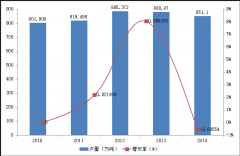
China is expected to become the most potential coffee consumer in the world.
Coffee, as a traditional western drink, has a long history and cultural heritage. The world consumes at least 400 billion cups of coffee every year, and the current annual global coffee consumption is about 10 million tons. Coffee is the first of the three largest drinks in the world, and it is also the second largest trading commodity in the world after oil. Shanpu consulting industry analyst pointed out that the world coffee consumption is about one year larger than cocoa and tea.
2015-07-23 China is expected to become the world with the most potential coffee consumption big country coffee.
Starbucks "combination of soil and foreign countries" to save itself.
The sharp decline in Starbucks' net profit was affected by the closure of Starbucks stores, according to industry analysts. On the one hand, closing the store needs to pay a certain fee, on the other hand, it can save the operating cost of the store. According to statistics, in July last year, Starbucks announced that it would cut 12000 jobs and close 600 stores. At the beginning of 2009, Starbucks announced that it would close 360 stores and lay off 6700 people.
2014-08-12 Buck self-help local combination industry insiders analysis net profit big down
Foreign media commented on the rapid growth of this coffee shop chain in China.
From Best Buy to BQ, many foreign brands and business models have met their Waterloo in China. However, the Western retail concept of foreign coffee shops, which was perhaps the least likely to succeed, has flourished in China. Despite thousands of years of tea drinking in China, coffee chains from the United States, Britain and South Korea have been able to expand rapidly in China. This coffee.
2014-12-30 Foreign media reviews this cafes coffee chain stores in China rapid growth 100
The pattern Beautiful Man in Chinese Coffee Market-- Italian Coffee Bean Chinese Coffee Market
After entering the 21st century, with the rapid development of China's economy, people's quality of life is constantly improving, drinks are becoming increasingly diversified, and the habit of drinking coffee has gradually become a fashion among Chinese people. Statistics show that more than 8 million tons of coffee beans are sold worldwide every year, of which China accounts for about 1x20 of the market sales. Some analysts pointed out that the consumption of coffee in China will continue at an annual rate.
2016-03-14 China Coffee Market pattern Beautiful Man Italian style Coffee beans stepping into the 21st Century
This time, CEO's letter writes about high-level adjustments that have a far-reaching impact on the future of Starbucks.
On the 21st of last month, Starbucks announced its results for the third quarter of fiscal 2016. Compared with fairly good revenue and same-store growth in 2015, Starbucks' growth this year has been somewhat disappointing, below analysts' expectations, and the flagging European market has still not been helped. In addition to the cold data, within this multinational company with 300000 people
2016-08-11 This time CEO wrote Buck future influence far high-level adjustment above.
An introduction to the Cultural and Historical reasons of American Coffee to understand the Cultural History of Coffee
Although Americans are world-famous for their coffee, the average amount of coffee they drink each year is less than half that of 1946, indicating that there is still a lot of room for expansion in the American coffee market. With coffee consumption on the rise again, the numbers suggest that despite appearance, the market is far from saturated, an
2016-01-05 American style coffee cultural history reason introduction understanding development history although Americans
Master Kang joined hands with Starbucks to enter the ready-to-drink coffee market.
Multinationals tend to look for a local partner on Chinese mainland because it is the easiest way to target consumers in China's huge market, Reuters reported today. The report also quoted analysts as saying that the cooperation between the two sides will reduce the cost of Starbucks ready-to-drink coffee and allow Starbucks products to appear in some small Chinese cities.
2016-06-14 Master Kang Baotuan Buck marching ready to drink coffee market
When the price of coffee beans fell by 44%, why did Starbucks go against the trend of Starbucks marketing strategy coffee?
This month, Starbucks China will raise the price of basic coffee in 12 cities, including Chengdu and Chongqing, by another 2 yuan, and the price after two price increases will be on a par with first-tier cities such as Beijing and Shanghai. Starbucks highlighted the rise in operating costs while ignoring the decline in coffee bean prices. Why raise the price? Is this death? Where does it have the strength to raise prices against the market? Starbucks' third-quarter financial results in 2015 are quite beautiful.
2016-03-15 Coffee beans price decline 44% Buck why but also against the trend marketing strategy
What is the demand for coffee in China?
With the globalization of economy and trade, China has introduced a lot of foreign brands, including successful examples and failure cases, and the most important thing often does not depend on the business model of foreign brands, but on the understanding of Chinese market consumers. When it comes to the most successful case, Western retail concept foreign coffee shops are booming in China. According to a report on the Financial Times website on December 29,
2015-09-08 China coffee market demand unexpectedly how big along with economy and trade globalization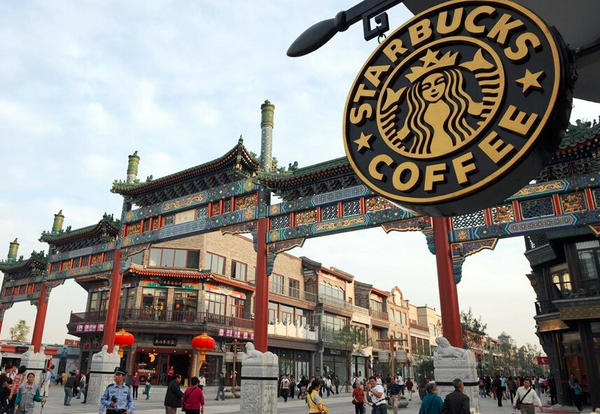
An inventory of the Development of International Cafe chains in China
From Best Buy to B & Q, many foreign retail brands have encountered a Waterloo in China, and successful business models in the domestic market cannot be replicated in China. But the international coffee chain is an exception, and although it seems least likely to gain a foothold in China compared with other retail sectors in Western countries, it has been a great success. The Financial Times made an in-depth report on this phenomenon. Although there are thousands in China
2015-06-09 International chain Cafe China Development status inventory Best Buy Anju Zhongzhong
Foreign coffee chains are growing rapidly in China and are becoming diversified.
According to the Financial Times, many foreign brands and business models have met their Waterloo in China, from Best Buy to BQ. However, the Western retail concept of foreign coffee shops, which was perhaps the least likely to succeed, has flourished in China. Although China has a history of drinking tea for thousands of years, coffee chains from the United States, Britain and South Korea
2015-01-07 Foreign coffee chain stores in China growth rapid form trend diversification UK